


Austin Car Accident Lawyer

A car accident can leave you with injuries, a damaged vehicle, and an insurance adjuster calling before you have even seen a doctor. An Austin car accident lawyer can explain the Texas rules that decide your claim and the deadlines that start running the day of the crash.
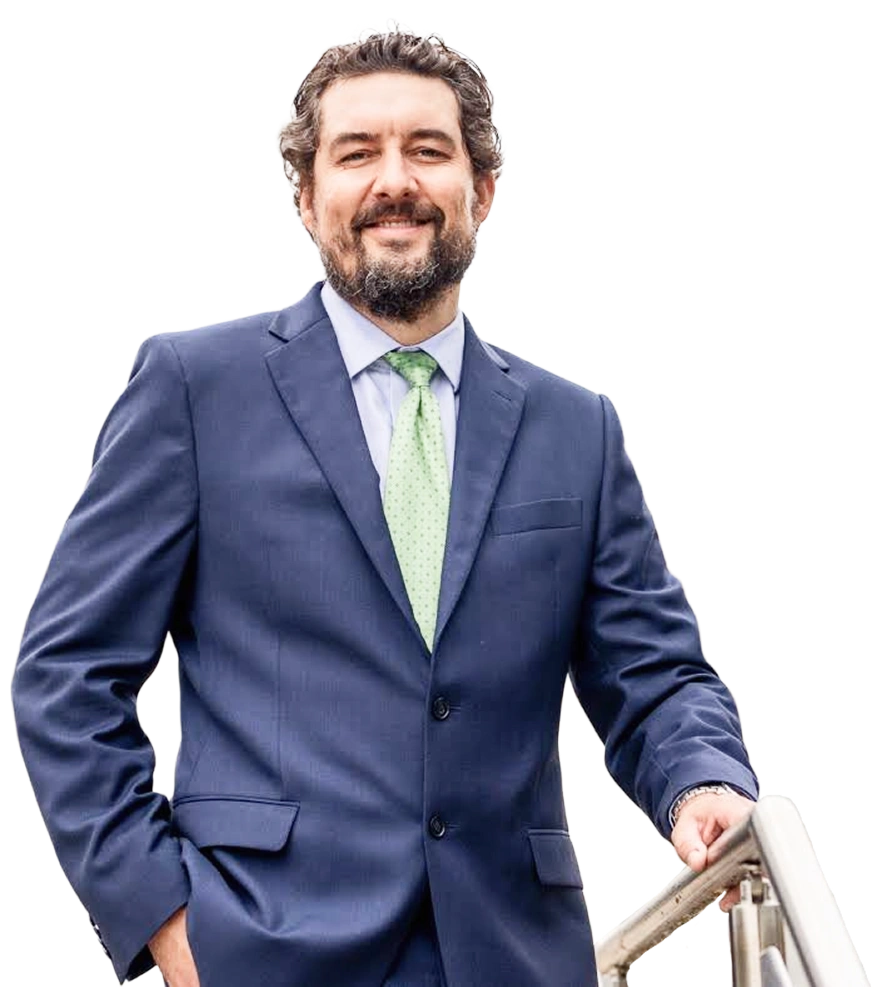
Breeland Injury Law is led by attorney Matt Breeland, who knows how auto insurers build their defense because he once worked alongside them. Call 512-764-3380 or contact us for a free consultation about your crash.
Why Choose Breeland Injury Law as Your Austin Car Accident Attorney

You get an attorney who has seen an auto insurer’s playbook from the inside. Matt Breeland spent eight years on the defense side of injury cases at Austin firms before switching sides in 2016. He knows the recorded-statement requests, early offers, and fault arguments that usually come first after a crash, and he prepares for them from day one.
That preparation carries into the courtroom. In 2019, as lead trial counsel, Matt obtained a verdict that TopVerdict.com ranked among the 50 largest motor vehicle jury verdicts in Texas that year.
Just as important, you will always know where you stand. You meet with Matt directly at your free consultation, and he gives honest answers about what a case involves, even when the answer is not the one you hoped for.
Types of Car Accidents We Handle in Austin
How a crash happens often decides who is at fault and which insurance policy responds. We handle claims involving:
- Rear-end collisions: Often the result of following too closely or distracted driving, and a frequent cause of neck and back injuries.
- Head-on collisions: Among the most violent crashes, often involving a wrong-way or impaired driver.
- T-bone and side-impact collisions: Frequently caused by a driver who runs a red light or fails to yield at an intersection.
- Single-vehicle crashes: These can still support a claim when a road hazard or another driver who swerved into your lane played a role.
- Rideshare accidents: Crashes involving Uber and Lyft drivers, whether you were a passenger or in another vehicle.
- Drunk driving accidents: Crashes caused by an impaired driver, which can raise additional legal claims.
- Hit-and-run accidents: Reporting the crash to police quickly helps preserve a claim even when the other driver is never found.
- Commercial vehicle accidents: Crashes involving delivery trucks, company vans, and fleet vehicles, where an employer and its insurer may share responsibility.
Understanding Texas Car Accident Laws
A handful of Texas rules shape almost every Austin car accident claim, from who pays to how long you have to act.
Texas’s Modified Comparative Fault Rule (51% Bar Rule)
Texas lets you recover damages even if you were partly to blame, as long as your share of responsibility is not more than 50%. Under Section 33.001 of the Texas Civil Practice and Remedies Code, a claimant whose percentage of responsibility is greater than 50% recovers nothing. For a claimant who clears that bar, Section 33.012 reduces the damages by the claimant’s own percentage.
Statute of Limitations for Car Accident Claims in Texas
In most cases, a car accident lawsuit in Texas must be filed within two years. Section 16.003 of the Texas Civil Practice and Remedies Code starts that clock when the legal claim arises, which after a car crash is usually the day of the collision. The statute lists a few exceptions, and when a crash is fatal, the family’s two years run from the date of death. A lawsuit filed after the deadline is generally barred, no matter how strong the claim.
Special Deadlines for Claims Against the City of Austin or TxDOT
Claims against a government entity run on a much shorter clock. Under Section 101.101 of the Texas Civil Practice and Remedies Code, a governmental unit, such as the Texas Department of Transportation (TxDOT) or Travis County, is generally entitled to written notice of a claim within six months of the incident. The notice must reasonably describe:
- The damage or injury claimed
- The time and place of the incident
- The incident itself
The same law allows a city’s charter to set a shorter notice period, and Austin’s charter does. The City of Austin asks for a written claim within 45 days of the incident. These notice rules generally do not apply when the government already had actual notice of the death, injury, or property damage, though whether that exception fits depends on the facts.
If a City vehicle, a City-maintained street, or a TxDOT work zone may have played a role in your crash, that shorter window makes early action especially important.
Minimum Insurance Requirements in Texas
Section 601.072 of the Texas Transportation Code sets the minimum liability coverage every Texas driver must carry:
| Coverage | Texas minimum |
| Bodily injury, one person, one collision | $30,000 |
| Bodily injury, two or more people, one collision | $60,000 |
| Property damage, one collision | $25,000 |
When two or more people are hurt in the same crash, each person’s share of that second limit is still capped at the single-person amount. A serious injury can use up a minimum policy quickly, which is where your own underinsured motorist coverage comes in.
Where Austin Car Accidents Happen Most
Crashes can happen on any street, but a few corridors combine heavy traffic, frequent merging, and sudden slowdowns:
- I-35: Austin’s main north-south route, where heavy volume and ongoing construction make abrupt braking common.
- MoPac Expressway (Loop 1): Express lanes, short entry ramps, and rush-hour backups create constant merging.
- US 183 and Research Boulevard: A high-speed commuter route with busy interchanges.
- Lamar Boulevard, South Congress Avenue, and Airport Boulevard: Surface streets with frequent intersections, turning traffic, bus stops, and pedestrians.
- High-density districts: The University of Texas (UT) campus, East Riverside, the Domain, and downtown around Sixth Street add cyclists, scooters, and rideshare pickups to the mix.
Work zones add their own complications. Construction zone crashes on I-35, including those along the Capital Express project, can involve TxDOT or one of its contractors, which brings the government notice deadlines into play and can add another party who may be responsible.
What Compensation Can I Recover After a Car Accident in Austin?
Depending on the facts, a Texas car accident claim can include three kinds of damages:
- Economic damages: Medical bills now and in the future, lost wages, lost earning capacity, and the cost to repair or replace your vehicle.
- Noneconomic damages: Physical pain, mental anguish, physical impairment, and loss of enjoyment of life.
- Exemplary damages: A penalty for serious misconduct, which Texas law generally allows only on clear and convincing evidence of fraud, malice, or gross negligence.
A drunk driving crash can support a finding of gross negligence, but the evidence still has to meet that standard. Keeping repair estimates, receipts, and pay stubs from the start makes every economic loss easier to prove.
What to Do After a Car Accident in Austin
The minutes and days after a crash matter for your health and for your claim. These steps help protect both:
- Check for injuries and get to safety: Move out of traffic if you can do so safely, and turn on your hazard lights.
- Call 911 and report the crash: Texas law requires a driver to notify police right away when a crash injures or kills someone or leaves a vehicle unable to be driven normally and safely.
- Exchange information: Get names, phone numbers, insurance details, and license plate numbers for every driver involved.
- Document the scene: Photograph vehicle damage, skid marks, traffic signals, road conditions, and where each car came to rest.
- Get witness contact information: An independent witness can settle a dispute over who had the light or who changed lanes.
- See a doctor promptly: Adrenaline can mask pain, and symptoms of whiplash or a concussion may not appear until the next day.
- Keep records of everything: Save medical bills, repair estimates, rental car costs, and proof of missed work.
- Consider legal advice before giving a statement: Many people wait to give the other driver’s insurer a recorded statement until they have spoken with a lawyer, since early statements are often used to reduce a claim.
Common Injuries From Car Accidents
Car crashes cause injuries ranging from soft tissue strains to permanent damage. Common car accident injuries include:
- Whiplash and soft tissue injuries: Strains that can linger for months and sometimes develop into longer-term neck and back injuries.
- Broken bones: From wrist and rib fractures to breaks that need surgery and hardware.
- Traumatic brain injuries: Including concussions, which can affect memory, concentration, and mood long after the crash.
- Spinal cord injuries: Damage that can cause loss of sensation, loss of movement, or paralysis.
- Burn injuries: Caused by vehicle fires, hot surfaces, or chemicals released in a crash.
- Wrongful death: When a crash is fatal, the surviving spouse, children, and parents may bring a claim for their own losses.
Dealing With Insurance Companies After an Austin Car Accident
The other driver’s insurer has its own job to do, and protecting your claim is not part of it. Adjusters often call early, ask for a recorded statement, and look for details that lower the value of the claim.
Should I Accept a Quick Settlement Offer?
In most cases, not until the full extent of your injuries is known. An early offer usually arrives while your bills are still coming in, and it is based on the treatment so far rather than the care still ahead. Accepting it means signing a release, the document that closes a claim permanently in exchange for payment.
What If the At-Fault Driver Is Uninsured or Underinsured?
Your own uninsured/underinsured motorist (UM/UIM) coverage is often the next place to look. Under Section 1952.101 of the Texas Insurance Code, an insurer cannot issue an auto liability policy in Texas without providing this coverage, unless a named insured rejected it in writing. Your declarations page shows whether you have it and how much.
A UM/UIM claim is filed against your own insurer, but it is still adversarial, because your company steps into the at-fault driver’s shoes when it evaluates the claim. We handle uninsured and underinsured driver claims with the same preparation as any other crash case.
Can I Still Recover If I Was Partially at Fault?
Yes, as long as your share stays at 50% or below. The practical fight is over the percentage itself. Adjusters often point to speed, lane position, or a late brake to push your share higher, since each point moves money off their side of the ledger. Photos, witness accounts, and the crash report are what push back.
How Long Does a Car Accident Claim Take in Austin?
The vehicle damage claim often wraps up first, while the injury claim takes longer because its value depends on how your recovery goes. The injury side generally moves through these stages:
- Medical treatment: A claim is rarely valued until you finish treatment or reach maximum medical improvement (MMI), meaning your doctors do not expect your condition to change much further.
- Building the demand: Medical records, bills, and proof of lost income are gathered and sent to the insurer with a settlement demand.
- The insurer’s response: The adjuster accepts, rejects, or counters the demand, and a second insurer may be involved if your own UM/UIM coverage applies.
- Negotiation or a lawsuit: Many claims settle at this stage. When they do not, filing suit adds discovery, depositions, and possibly a trial.
The two-year filing deadline keeps running throughout, so a long recovery does not buy extra time to file.
Ask A Car Crash Lawyer | Frequently Asked Questions
Check whether anyone is hurt, and call 911 if someone is. If no one is injured and your car can still be driven, Texas law generally expects drivers to move out of the main travel lanes to a safe spot nearby, which also lowers the risk of a second collision on roads like I-35 or MoPac. Photos and witness names can wait a few minutes. Getting yourself and your passengers out of danger cannot.
No. Texas law requires drivers to report certain crashes and exchange information, not to decide who caused them. Fault is sorted out later based on the evidence, so many people stick to the facts at the scene and avoid apologizing or guessing about what happened.
Your first conversation with us costs nothing. We offer a free consultation, where Matt Breeland can review your crash, answer your questions, and explain how fees would work before you decide anything.
It is too early to say at the start. The value of a car accident claim depends mostly on the medical record: the treatment you needed, what it cost, and the care your doctors expect you to need later. Lost income, the lasting effect on your daily life, and any share of fault assigned to you also move the number.
A few situations can change the usual two-year answer. For an injured child, Texas generally pauses the deadline until the child turns 18, and a claim against a government unit carries an earlier notice requirement that comes first. Opening a claim with an insurance adjuster is also not the same as filing a lawsuit, so an open claim does not stop the clock from running.
Yes, and in a crash involving several drivers, responsibility is divided among all of them, not just between you and one other person. A jury can even assign a share to someone who is not part of the lawsuit, such as a driver who already settled. Any settlement money already received from one party is credited against what the others owe, so the percentages across the whole crash, not only your own, shape the final number.
The insurance that applies depends on what the driver’s app was doing at the moment of the crash. When the app is off, the driver’s personal auto policy generally applies. When the driver is logged in and waiting for a ride request, Texas requires coverage of at least $50,000 per person, $100,000 per incident, and $25,000 for property damage. During an accepted ride, the required coverage rises to $1 million per incident. Because timing decides which layer pays, the app’s trip records often become key evidence.
Missing the notice window is a common problem, but it is not the only difference. The Texas Tort Claims Act allows claims against the government only in limited situations, such as injuries caused by a government employee’s use of a motor vehicle or by certain road defects, and it caps the damages a governmental unit can be required to pay.
A private construction contractor may also share responsibility for a work zone crash, although Texas law gives highway contractors a defense when their work complied with TxDOT’s contract requirements. Sorting out which rules apply usually starts with finding out who controlled that stretch of road.
How long a case takes mostly comes down to a few factors: how long treatment lasts, whether the insurer disputes fault, how many insurers are involved, and whether the case has to be filed in court. A claim with clear liability and a completed recovery can sometimes resolve in months, while a disputed claim that goes into litigation can take a year or more. We give clients a realistic estimate once the medical picture is clear, rather than a guess at the first meeting.
Your own policy may still pay in more than one way. Personal injury protection (PIP), which Texas insurers must include unless you rejected it in writing, pays medical bills and part of your lost income regardless of who caused the crash, with at least $2,500 in coverage. If the driver fled and was never identified, uninsured motorist coverage in Texas generally requires proof that the other vehicle actually made contact with yours, so photos of the damage and a prompt police report matter even more.
Contact an Austin Car Accident Lawyer Today
The days after a crash are full of phone calls, forms, and decisions you never expected to make, and the deadlines keep running in the background. At Breeland Injury Law, Matt Breeland can review your crash, explain which rules apply, and help you decide what comes next.
Bring your crash report number, photos, and any bills you have received. Call 512-764-3380 or contact us today to schedule a free consultation with an Austin car accident lawyer.

I had a great experience working with Matt Breeland. He was professional, responsive, and kept me informed throughout the entire process. He took the time to answer my questions and made everything as smooth and stress-free as possible.
Thank you, Matt, for all your hard work and for helping me through my case. I truly appreciate everything you did and would definitely recommend your services to anyone looking for an attorney they can trust.
After I was rear-ended and unsure how to navigate the legal process, Matt Breeland was recommended to me and I’m really glad he was. He made everything simple and easy to understand, and the whole process ended up being much less stressful than I expected. He handled everything professionally and kept me updated along the way. I also really appreciated the help from his legal assistant, Lisabeth. I’m very grateful for their support and would definitely recommend Matt to anyone who needs a great attorney!
As a foreigner, this was my first time experiencing an car accident here, and I had no idea how the process worked. I felt scared, worried, and overwhelmed. I read many law firm reviews before choosing here, and it turned out to be a perfect decision.
He was incredibly kind, and what I appreciated most was communication. He always reassured me and made me feel at ease throughout the entire process. He handled my case very efficiently and brought everything to a smooth conclusion.
I’ve seen many people around me experience long delays in their settlements, but my case was resolved much sooner than I expected. I truly and sincerely recommend this law firm.
I highly recommend Attorney Matt Breeland and Breeland Injury Law for personal injury legal representation. He and his team provided exceptional guidance and representation for my matter following a car accident in which I was rear-ended at a stop light, my car was totaled, and I sustained injuries for which my doctor expects I will require chronic pain management.
Matt Breeland always made himself available to explain the complex legal concepts of my case, which was instrumental in helping me understand the implications of every decision he and I needed to make. He always communicated in a manner that made me feel supported and informed. And his responsiveness to my calls, texts, and emails was invaluable during critical phases of the process.
Mr. Breeland provided much-needed reassurance throughout the 17 months from our first introduction to settlement with the insurance company for the person who hit me. His commitment to keeping me grounded through some very difficult times and focused on the ultimate goal is much appreciated.
I am thoroughly satisfied with Mr. Breeland’s representation. I would enthusiastically recommend him and Breeland Injury Law to any business or individual seeking strong, effective, and results-driven legal counsel for a personal injury case in Austin, Texas.
Matt was recommended to me by one of the biggest personal injury firms in Austin. Over the course of my 6 month case, he guided me every step of the way and made the process very streamlined and straightforward. He always replied quickly and definitely helped manage my expectations. If you need personal injury legal advice, I couldn’t recommend Matt more highly.
I can’t say enough great things about Breeland Injury Law. From start to finish, Matt was incredibly attentive, professional, and genuinely cared about my case. He took the time to explain everything clearly, kept me informed every step of the way, and worked tirelessly to make sure I received the best possible outcome.
What truly stood out was his integrity—he even reduced his fee to ensure I could receive the full benefit of my settlement. That kind of compassion and dedication is rare.
If I ever need an injury lawyer again, Matt Breeland will be my first and only call. I highly recommend him to anyone looking for a skilled and trustworthy attorney who puts their clients first.
I was in a rear end accident and had several medical bills related to my neck. Even with issues from the medical providers and records, Matt was able to get a settlement that covered all my expenses and gives me a cushion for future expenses. He made the process easy for me.
I had an excellent experience working with Matt Breeland with Breeland Injury Law. He was knowledgeable, professional, and truly dedicated to helping me navigate my legal situation. From our first consultation, he took the time to explain everything clearly, ensuring I understood my options and the best course of action. His attention to detail, responsiveness, and commitment to my case gave me confidence and peace of mind throughout the process.
Beyond his expertise, Mr. Breeland was compassionate and genuinely cared about achieving the best outcome for me. He handled everything efficiently and kept me informed at every stage. I highly recommend Breeland Injury Law to anyone in need of a skilled and trustworthy attorney.
I can’t thank Matt Breeland enough for everything he did for me. From day one, he went above and beyond. always taking the time to explain every step, answer all my questions, and make sure I felt supported throughout the entire process. He truly cared about my well-being, not just the case, and made sure I got the best possible outcome. His professionalism, dedication, and compassion are unmatched. I would highly recommend him to anyone in need of an injury lawyer who will fight for you and genuinely take care of you.
Matt is an amazing attorney. He made the process of my accident smooth, and not only that, I had a second accident right after the first, and he handled both expediently and efficiently. He knows his stuff. He’s such a nice guy; he makes you feel comfortable. He responds to your texts/calls, and if you don’t understand something, he’ll explain it to you until you do. I put all my trust in him, and I’m glad I did; he’s more than an attorney—he’s a friend. I highly recommend Matt.
My husband and I were involved in a multi-car accident in 2022; after speaking to several law firms, we decided that Matt would represent us through the complicated legal landscape. What sets Matt apart from bigger law firms is the access and communication to speak to your actual attorney. We had a standing Wednesday appointment to speak to Matt regarding any questions, concerns, and expectations about our health and our case. As our case evolved to the nuances of personal injury Matt continued to go to bat for us against numerous law firms with unwavering conviction. He will give you an honest, unbiased opinion of your options and your choices regarding your case going forward and insert his expertise on possible outcomes. Matt is a genuine person who is deeply passionate about his clients and the law. If you are considering hiring an attorney, you can expect honesty, transparency, and fairness from Breeland Injury Law.
Truly one of the best experiences I’ve had with an attorney. Matt quite literally saved me from a terrible situation and gave me the best outcome. I cannot recommend him enough.
A friend of mine recommended Matt to me after being in a car accident. This was the first time I was in a car accident and I had no clue what I should do. I am glad that I had chosen Matt as my lawyer because he helped me along the whole way. While working on my case, I moved to another country, then moved back to the states. But Matt made everything very easy for me. I had full trust in him that he was doing the best for me and everything turned out great. Highly recommend Matt Breeland!
I was injured in a traffic accident as a pedestrian. After talking to a few lawyers, I decided to choose Matt for two reasons: 1) I couldn’t find any bad reviews of him online (now I understand why), and 2) he was incredibly patient listening and explaining to me the whole process of being involved in a personal injury case. I am not a US citizen, I was in the US working temporarily so I had no idea what was coming. Having someone on my side who truly cared and made everything easy simply meant the world to me. He was always available to answer my questions and the case turned out incredibly well. Choosing Matt has been one of the best decisions I have ever made, as he turned one of the most traumatic moments in my life into something manageable. I cannot thank him and recommend him enough.
A mutual friend referred me to Matt after a car accident that left me injured. I did some shopping around before I contacted Matt, and after we spoke I knew he was the right person to represent me. He was transparent, supportive, and communicative. When searching for a lawyer who specializes in injury law, you may come across some questionable characters. Thankfully, I found Matt, and he is not that. Matt brings integrity and sincerity to his work. He made it easy to communicate and was always accommodating to my schedule if I was busy. His persistence got me through the settlement process seamlessly and painlessly, with my settlement done just in time for the holidays. I’m thankful for how easy he made a stressful process.
Matt went above and beyond in my personal injury case. There weres several unexpected and unique twists and turns that popped up, and Matt never wavered. If you’re in need of high quality, attentive, and caring representation with attention to detail, I couldn’t recommend anyone more than Mr. Breeland. Huge thanks to Matt Breeland and his team!
I had to make my first insurance claim after a motorcycle accident with an uninsured motorist and quickly realized I couldn’t get what I needed myself. Breeland Injury law got me the maximum allowable. It took longer than I expected, but I am very pleased with the results. Matt worked hard to get me what I needed, and I’m very greatful.
I was very impressed with the level of service I received! Matt Breeland was my attorney. I had an injury (slip & fall) caused by negligence that was caught on video. They had a phone consultation with me and then we met face to face. They were very thorough and told me the very worst scenario and the best and also a typical outcome. They were very responsive and I even corresponded by text and phone calls with Matt (e-mails as well). There were some challenges on the way due to my personal situation, but they were very accommodating. I have had bad experiences with lawyers before (not responding to phone calls or emails); so it was very refreshing having the level of personal service I received. I felt that they were really my partner in getting a just settlement. I highly recommend Matt Breeland!
You don’t realize that you need a lawyer in life until something unexpected happens. After calling different lawyers i decided to pick Matt, he has good communication skills and will get back to you with any questions asked. I believe that Matt is someone who works hard and tries which in my experience is hard to find these days. I made the correct decision with being represented by Matt Breeland.
Matt Breeland is an AMAZING attorney. Not only was he considerate and consistent in his communication, but he went to bat for me! Although I hope I don’t have a need for him in the future, I would use him again and again!! j can’t recommend him enough.
I was in a motorcycle wreck July 2023 and was out of work for 4 months. I had never dealt with lawyers before. My case got referred to Mr. Breeland from Daniel Stark. There were some communication concerns but that may just be that I didn’t like being in the dark with so many unknowns but when I had questions Mr. Breeland was very patient with me and answered them to the best of his abilities. When my insurance and doctors tried to charge me AND demand money from the settlement amount Mr. Breeland did a great job getting that sorted out and did the same when my orthopedic sent debt collectors my way. Obviously I hope to never need an injury lawyer again but if that need arises again I’d trust Mr. Breeland again.
Matt is a brilliant attorney and very knowledgable in the field. I never had a doubt at any moment and he ensured that I understood the process and all my options. I believe I would have been in worse condition if he did not take care of me. No one wants to be in a car accident, but if this does happen to you, pick up the phone and call as you will be in good hands.
Many years of experience pairs nicely when you are cared for like a family member. The wealth of knowledge that Matt has certainly will make you feel comfortable moving forward towards the right direction.
My overall experience if i can rate it more than 5 stars i would. Don’t waste time reviewing others, just pick up the phone and see for yourself.
We are ever so grateful to have worked with Matt Breeland to help us with a personal injury issue. The case was resolved to our great satisfaction and maybe more importantly, Matt was attentive to our needs, responsive to our questions, and not once did we feel that we were “just another client”. I hope we won’t ever again require such services, but if we do, we know who we will be calling!
Matt was honestly the best lawyer I could have hoped for. My case was complicated and Matt was understanding, patient, and took care of everything for me. Everything turned out so much better than I could have even possibly imagined. I highly recommend his services and would not hesitate to call him again.
Matt is very kind and hardworking man who diligently handled my case and made sure that everything was taken care of.
Matt Breeland is not only great at what he does, he also won’t dance around, lie to you, or ghost you. He took on our case, after it just hanging in the air and our lawyer ghosted us. He made it his goal to help us and get us some justice! And boy did he deliver and also in a nick of time.
Very professional, amazing communication, hands on and zero worries for us. Could not have felt more comfortable. We are very thankful to everything he has done for us. Tha k you, from the bottom of my heart!
If it wasn’t for Matt I wouldn’t have gotten anything. He worked really hard getting a settlement for me. If at anytime you want to talk to him, he is there for you. He explains everything to you. With me sometimes two or three times before it would sink in for Me. But he would do it over an over for me if I needed it. Matt is a wonderful attorney to work with.
I’ll start with a little pretext, I was riding my motorcycle on the access road of 183 on July 20th and a car jumped across 3 lanes of traffic and side swiped me. I broke 4 out of 5 metatarsal bones in my right foot. Initially I went to Matt while he was still with FVF law, but while my case was still in initial phases Matt decided to go off on his own and open up his own practice. After being given the choice to stay with FVF or go with him it was an easy decision to stay with Matt especially remembering the fact that he also helped my friend win a HUGE settlement years ago.
Anyways after breaking my foot and deciding to stay with Matt on his independent venture Matt was the kind of lawyer I needed him to be from the very moment we started things at FVF to the final delivery of my settlement. Matt never let me feel out of the loop and he was very responsive to my outreach even when I’d text him on days/times you wouldn’t always expect a working professional to respond. Matt’s ability to keep me as a client level headed and informed through the whole process was what made him good and his attention to detail and personal touch are what makes great. I would recommend him to anyone looking for an injury lawyer!
Matt Breeland is awesome! He’s a straight shooter that gets back to you right away. It was always easy to reach him, which can be a bit of a challenge with some attorneys. I would recommend having him handle your case!
After waiting for seven months for the at fault party’s insurance to finalize only to be offered an amount less than my deductible, I reached out to one of the “big” injury firms and was referred to Matt. I am so glad I made that call! Professional, highly communicative, and an easy demeanor reduced my stress around the situation greatly. I was hoping to get reimbursed for my out-of-pocket expenses around the rental car, lost wages, and vehicle replacement. In the end, I received over three times that amount. I hope not to need his services again, but I will surely be recommending him to anyone I know who does.
My first time involved in a medical injury case and Matt could not have handled it better, definitely recommend!
Matt did an outstanding job handling my injuries claim from the beginning to the end. His priority was how I could get I the best treatment . Always kept communication wide open, honest and very diligent. Very professional
Very professional attorney who got great results for my case. Would highly recommend!
he’s great! He helped me deal with a very difficult insurance company. He’s had much more profitable cases than mine, but he still helped. His negotiation skills are stellar and as busy as he is he still manages to be very communicative. He’ll make sure you get the medical treatment you need and he will also get to know you.
Mr. Breeland was very communicative, very professional. Great with his time management. As well being up front about everything from price to how long it could take. Made me feel like my case was very important to him as well.
Matt did a phenomenal job for me. His expertise, precision, and dedication was beyond what was expected. I hope I never have to deal with a situation like this again, but if I do; I at least know I have the best representation in town with Matt!
Outstanding Attorney And Staff. They Helped Me Immensely,Ensuring That I Received All The Necessary Treatment I Needed For My Recovery.
Matt was very professional, friendly and was assuring throughout the whole process. I could not recommend him enough!
After my car accident my father researched online for the top attorneys in Central Texas. Breeland Injury Law popped up. I gave him a call and the entire case was a pleasant experience. He and his team were very accessible and answered all of my questions and kept me abreast of every step in the process. I would definitely recommend Breeland Injury Law.
Matt and his team are amazing, they are extremely understanding of what their clients are dealing with and go above and beyond to get the best results possible. I highly recommend them for any of your personal injury needs!
Matt Breeland’s honesty and genuine care for me, his client, impressed me in all ways, and his many successes speak clearly of his legal talents. He and his office are easy to work with, and are gentle, even when you don’t understand the process. I highly recommend Matt Breeland.

Count On Austin
Attorney Matt Breeland
Contact Breeland Injury Law
Fields marked with an * are required
